

It's Sunday and you know what that means.
Another day, another look back over our seven-year journey as we prepare for our ERAS show at Hootenanny, Inverness.
We've mentioned a few times why we switched from traditional stage monitors to in-ear monitors. Today, I thought I'd explain the decision in a bit more detail.
This was one of the biggest changes we've made as a band. We didn't really understand in-ear monitoring or how it worked when we first started looking into it. All we knew was that getting blasted in the face with music while struggling to hear ourselves wasn't how we wanted to play anymore.
For those who aren't in a band, stage monitors are the speakers you often see at a singer's feet. They play a separate mix tailored to what each musician needs to hear. A singer might have their vocals and guitar turned up while the other instruments sit further back in the mix. In-ear monitoring works on a similar principle, but instead of using speakers on the floor, each musician receives a monitor mix through a pack worn on their person and connected to headphones or in-ear monitors. This gives everyone more control over what they hear, allows for a more balanced and detailed mix, and helps reduce the amount of sound coming from the stage itself.
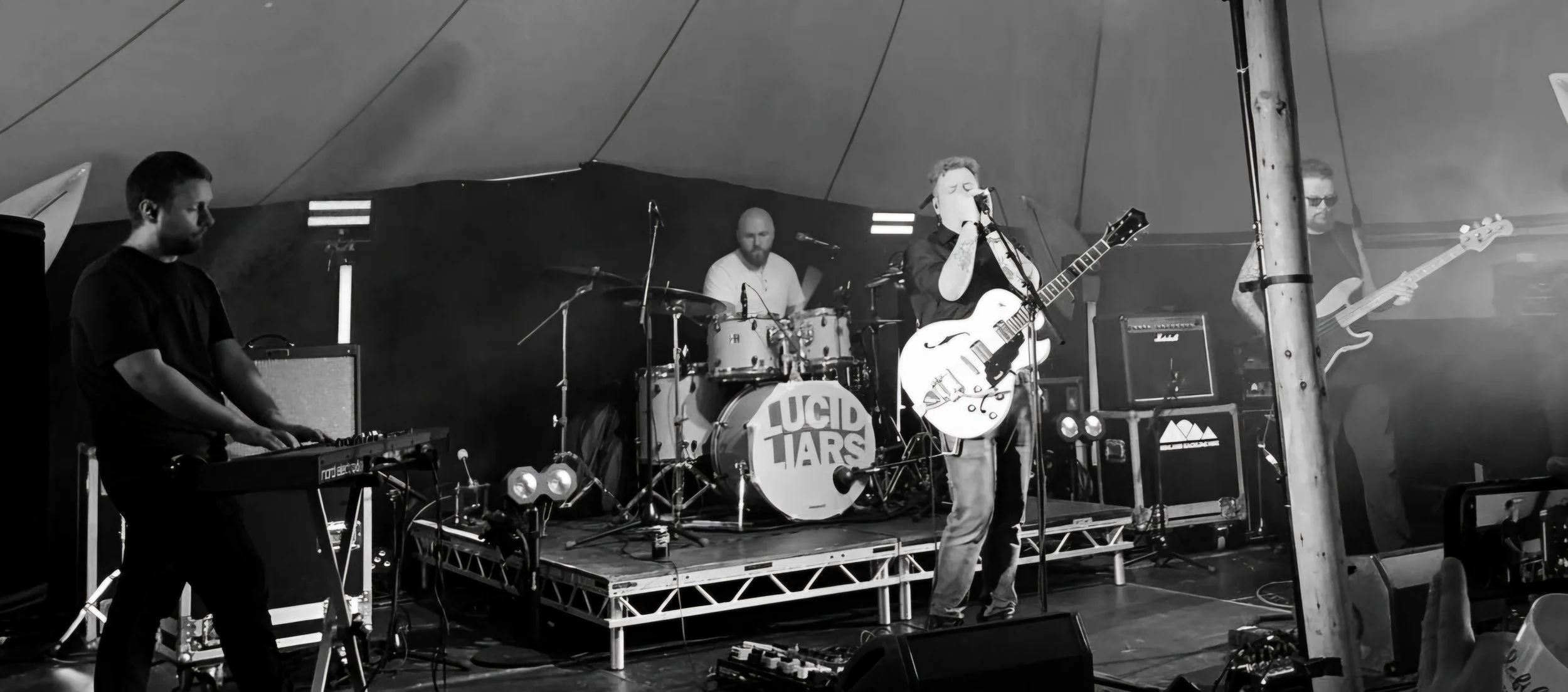
Lucid Liars are Belladrum 2024, when we’d just started using IEMs - monitors at feet were off
Stages can get incredibly loud. In a typical four-piece band, you've got a drummer, a couple of loud guitar amps and a thumping bass. Getting all those instruments to sit together without feedback, excessive volume or one side of the stage drowning out the other can be a real challenge.
I remember when I decided it was time to explore other options, when we first started exploring in-ear monitoring in the early days. We had a rehearsal in one of the practice rooms in Inverness. It was a small space and something of a reverberation trap. Because of the room layout, I'd usually set up in the corner opposite Jack on drums. Craig would be on his keys near the mixing desk, which was mounted vertically on the wall.
Halfway through one rehearsal, I started getting a headache. Then I noticed a slight ringing in my left ear. By the end of the session, I had a full-blown migraine and couldn't hear very well. I couldn't say for certain what caused it, but the room was incredibly loud and reflective, and I began to worry about what that noise was doing to my hearing.
I went home, had a rest and went to sleep. When I woke up, my hearing still didn't seem right in my left ear. Weeks turned into months. Things improved, but my hearing never quite returned to how it had been. I also noticed a slight ringing, particularly at night when everything was quiet and I was trying to sleep.
I spoke to my GP, who thought earwax might be contributing to the problem (ew), so I went to have it checked and cleaned. The clinician told me my ear canal was completely clear and couldn't identify an obvious explanation for the difference in my hearing. Hearing damage was a concern.
That was a lot to take in. Since then, things have remained fairly stable, but I still notice the difference. Mixing and recording music can be a bit more challenging because I often have to switch the stereo channels to check whether something sounds balanced. It's something I've had to learn to work around, and it's made me much more conscious of looking after my hearing.
I wish we'd looked into in-ear monitoring sooner.
Aside from helping us manage our exposure to loud stage sound, what else has changed.
Since moving to digital amp modelling and our in-ear setup, our stage has become remarkably quiet. I've taken my in-ears out during a soundcheck before and been surprised by how little I can hear apart from the drummer and a singer testing their vocals.
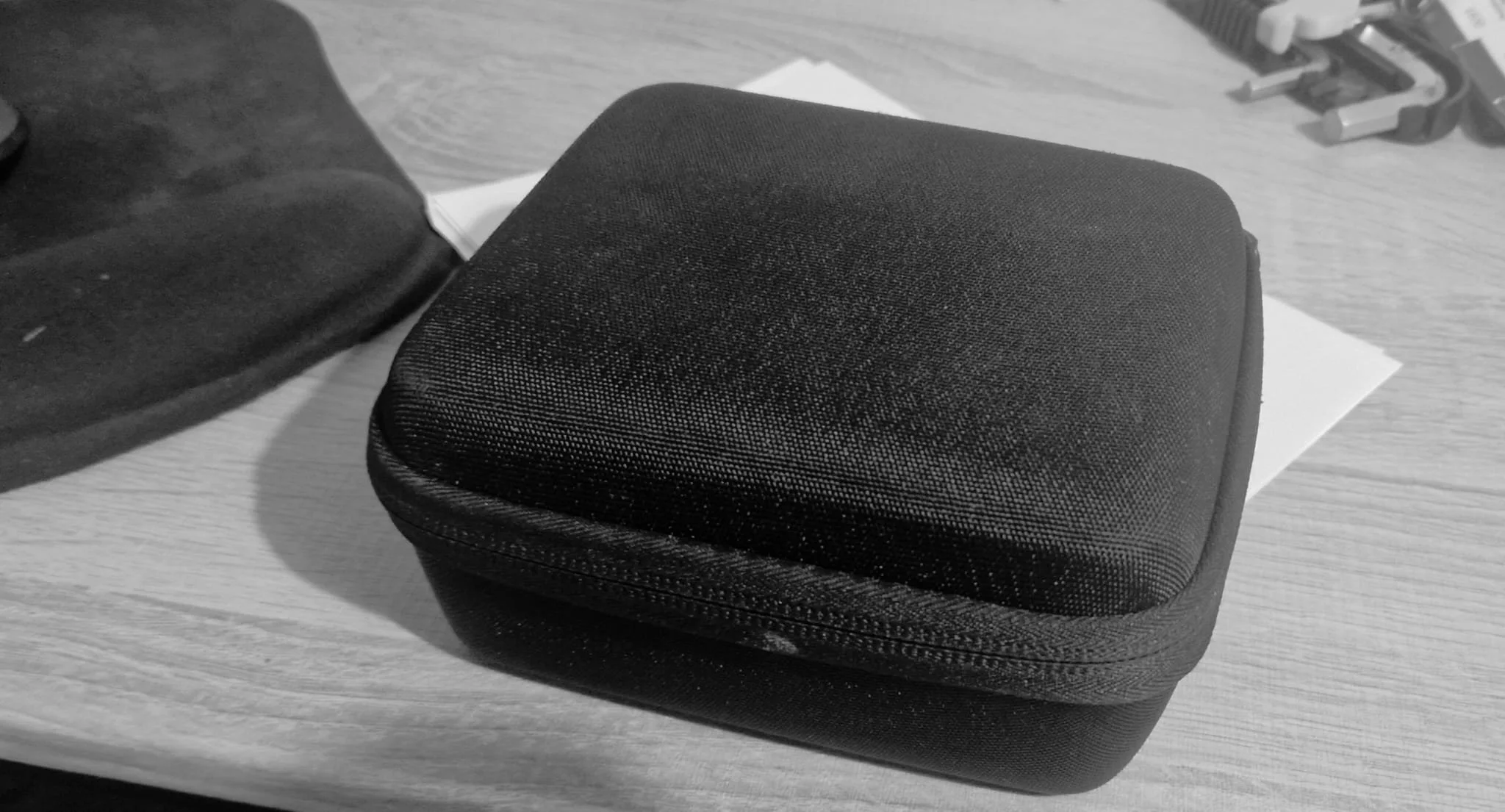
The magic little box that’s saving my hearing one gig at a time
Everything else is coming through our in-ears: guitars, loop lines, samples, vocals, bass and whatever else we need. Each instrument can be EQ'd and balanced so we can hear the details without having to compete with the volume coming from the stage. It's made a huge difference to how comfortably we can play together.
Having our own stage box and in-ear setup has also helped us achieve a more consistent front-of-house sound. By keeping the stage volume down, we give the sound engineer more control over what the audience hears. I originally assumed this setup would be a hassle for sound engineers. Between the in-ear monitors and the digital amp modelling, I thought we'd be making their jobs more complicated. As it turns out, most of the engineers we've worked with have been very positive about it.
One of the guys from Sneaky Pete's put it brilliantly:
"Think of it like this. The quieter the stage, the more control I have to ensure you guys sound like you should."
Another engineer, from An Séomar, said:
"Perfect. Now I can focus on making sure you've got a perfect representation of your sound and we don't have to piss about with monitors."
That was a bit of a surprise. I'd assumed that with sound engineers, it was often a case of doing things their way or not at all. Of course, every venue and engineer is different, and traditional monitors still have their place. But we've found that many engineers appreciate having less stage noise to work around.
Our setup gives us a more consistent monitoring experience while allowing the engineer to focus on the sound out front. Of course, in-ear monitoring isn't automatically safer just because you're wearing headphones instead of standing in front of speakers.
The volume still matters. A badly balanced mix or an unexpected burst of feedback can be just as unpleasant through in-ears, and potentially harmful at high enough levels. Good isolation, sensible volume levels and a carefully managed mix are all important. We've learned that through experience.
On a few occasions, we've used our in-ears alongside a venue's sound engineer, only for something to be boosted unexpectedly and send a blast of noise or feedback straight into our ears.
We quickly learned to keep our in-ear levels low during soundcheck, particularly while things are being connected, tested and adjusted. More importantly, we moved towards using our own stage box so we could have greater control over our setup and monitoring.
That doesn't mean we can ignore what's happening at the venue or that things can't go wrong. It simply means we've got a more consistent starting point and a better understanding of how to manage our own mixes. It's also helped us communicate more clearly with sound engineers. Everyone knows what we're sending them, what we need to hear on stage and how the setup is supposed to work. The result is a smoother soundcheck and fewer surprises.
Looking back, switching to in-ear monitoring has been one of the most transformative changes we've made to the way we perform live. It's helped us reduce stage volume, hear each other more clearly, work more effectively with sound engineers and take a more active role in managing our own sound.
Most importantly, it's made hearing protection a much bigger priority for me. In-ear monitors aren't a magic solution, and keeping the volume at a sensible level is still essential, but a well-managed setup gives us much more control over our sound on stage.
After seven years of figuring things out as we go, it's another example of how a change that initially seemed complicated can end up making life easier for everyone involved. We're still learning, but we now have a setup that lets us focus more on playing the best show we can.
Until next time.